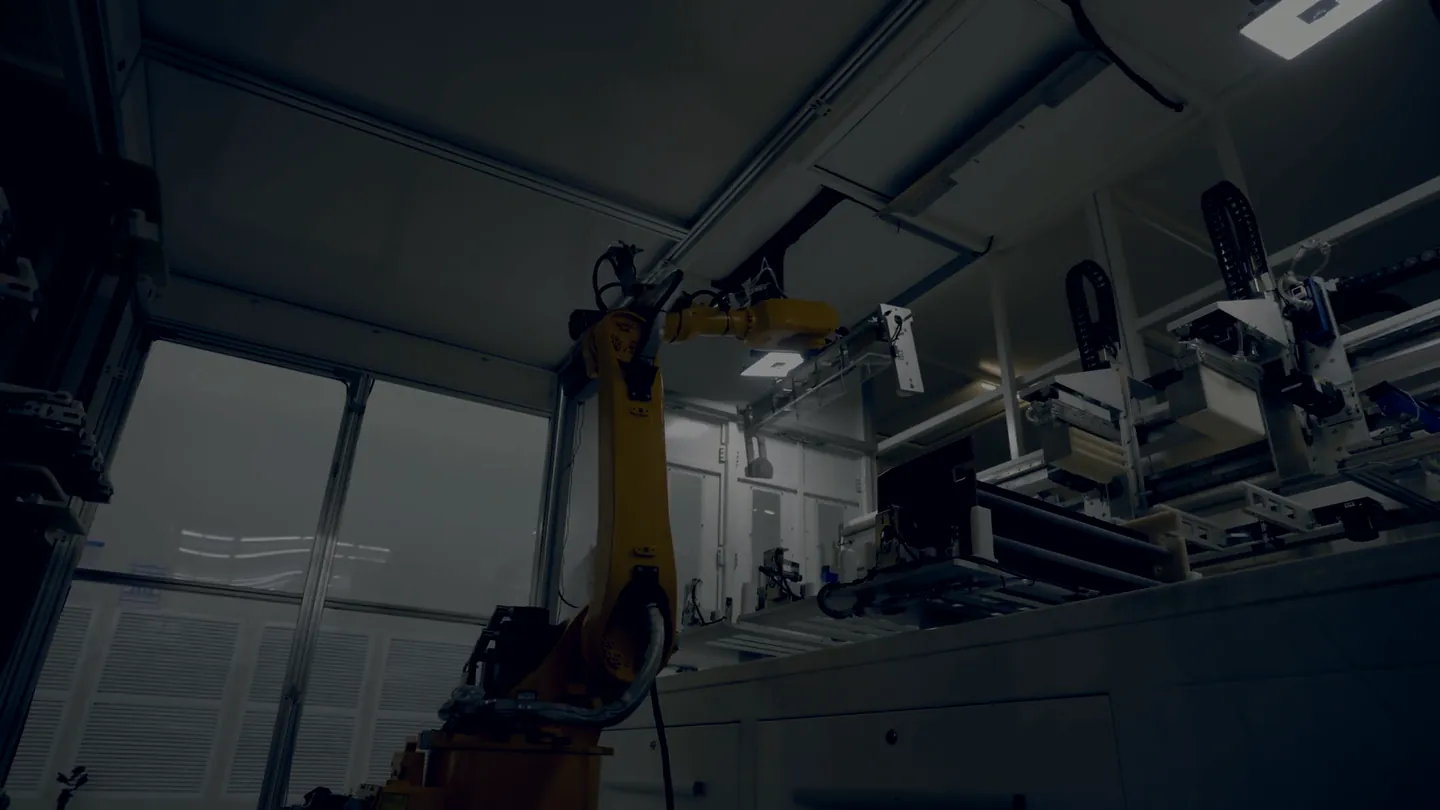
Machine vision software for robotic cells
We tell the robot where to grip. The client stays yours.
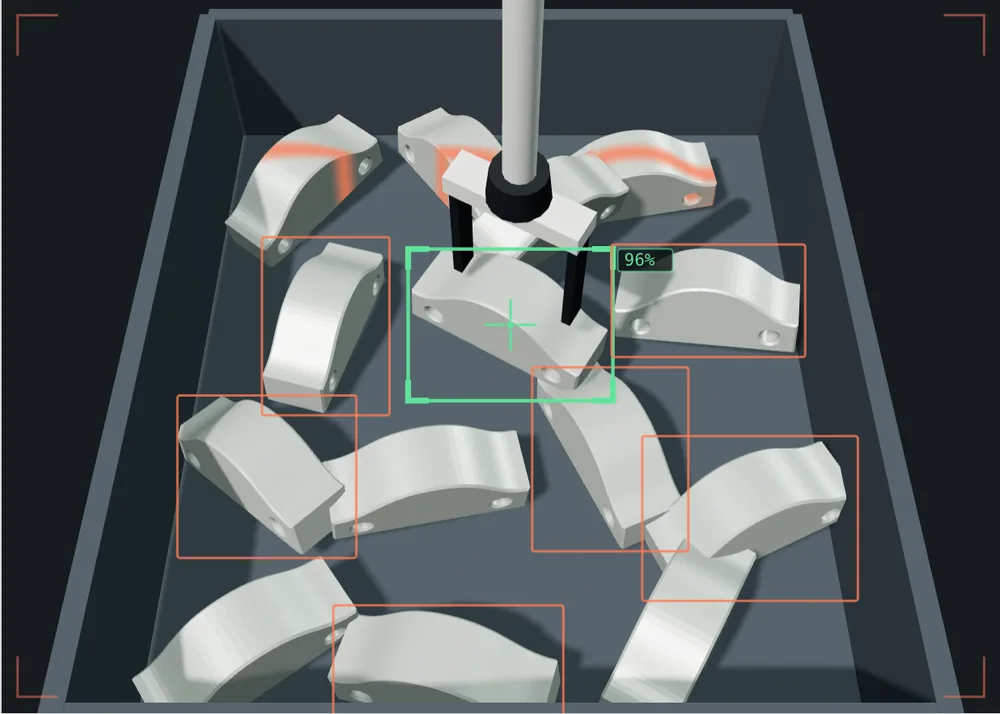
And what to reject on the line. We train the model on the actual parts from your customer.
Archival footage, not our system.
01 Your customer
We don’t interfere with your client.
Whoever sends us a project also hands over the relationship with their company. That’s worth more than the project. We treat it this way.
- NDASigned before we open the drawing, not after the quote.
- Non-competeThe contract includes a clause about your client, twenty-four months from project closure.
- InvisibilityWe don’t appear in quotes. We attend meetings only if you bring us. Our name isn’t on the machine or the nameplate.
- Direct requestsIf a factory contacts us directly and you’re already working in that area, we forward the request to you.
02 The boundary
Where your work ends and ours begins.
We write the inspection that deploys the model to production, on the robot and the PLC you already have. No hand-written rules: models that work when the part shifts position, or when the lighting changes in the shop.
You
- Mechanics and EOAT.
- Electrical panel and wiring.
- PLC and safety.
- Layout, assembly, on-site commissioning.
- The relationship with the client.
Us
- Image acquisition and dataset construction.
- Model training and validation.
- On-machine inference.
- The interface to your PLC.
- Model monitoring over time.
We communicate with the PLC via TCP/IP, Profinet, or EtherNet/IP. We deliver the model in ONNX. It runs on an industrial PC with a GPU inside the panel, not in the cloud: your clients’ images don’t leave the facility.
03 Before you promise it
Before promising it to the client, let us see it.
Send a photo of the part, the tolerance, and the cycle time. Within two working days, you’ll receive a two-page document with one of three answers. It’s free, and if the case doesn’t hold up, we’ll tell you, even if it costs us the job.
-
Feasible.
It states the threshold we guarantee and how we measure it during commissioning.
-
Feasible with reservations.
It specifies what needs to change first: lighting, grip, how the part arrives, cycle time.
-
Not feasible.
It explains why. If there’s another way to solve that problem, we’ll write it down even if we don’t handle it.
04 What stays with you
If you stop calling us tomorrow, the system keeps running.
- We deliver the trained model exported. It runs without us.
- The annotated datasets are yours, images included. We don’t reuse them for other jobs without asking.
- The integration code is in your repository. Not ours.
- The fee covers monitoring and retraining. If you cancel it, the system doesn’t stop: it just stops improving.
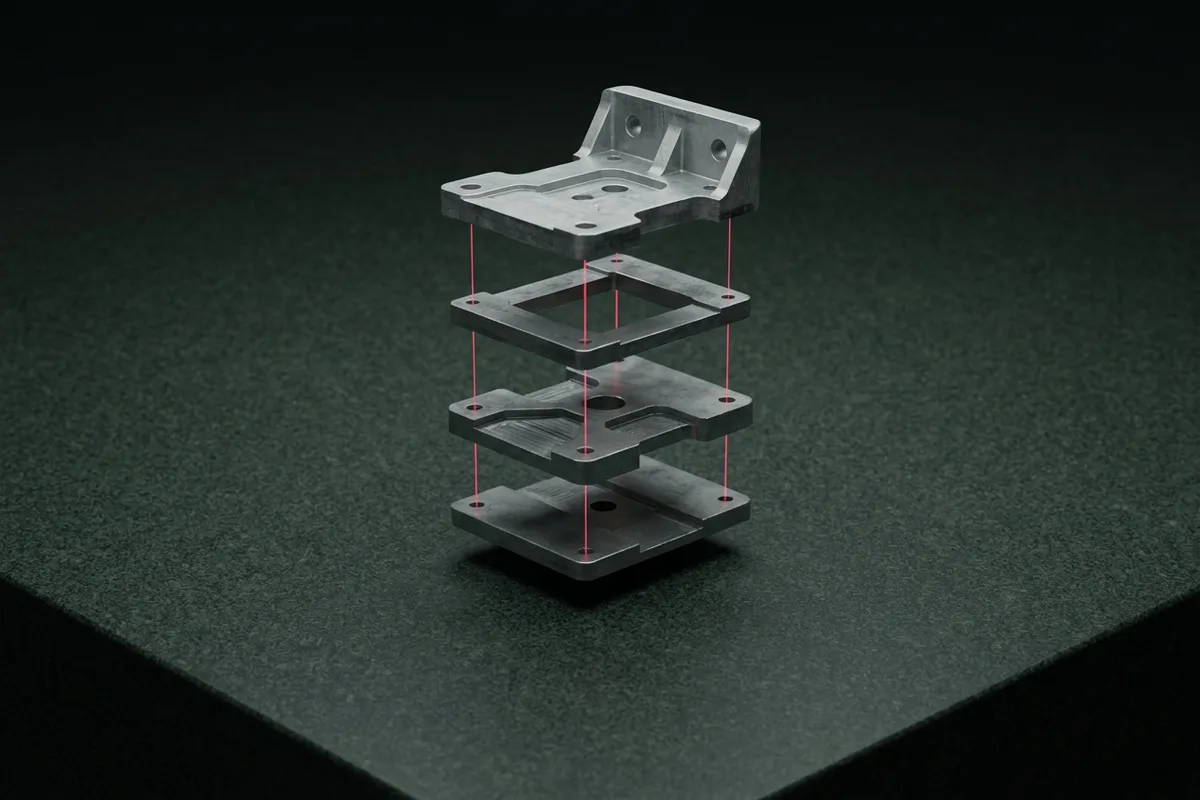
The reason the fee exists is that models degrade. The sheet metal supplier changes, the workshop lighting shifts in February, and the false reject rate rises without anyone touching anything. That’s what we watch.
05 Who is behind it
We are new, and we say it ourselves.
Collimo started within Firmamento and is currently a project, not a separate company. When it has enough work, it will stand on its own. We mention it here because it’s the kind of thing you’d find out anyway, and it’s better to read it from us.
We don’t have clients to show yet. That’s why the first step is free and the final payment is tied to a written threshold: we take the risk off your hands since we can’t yet do it with references.
06 The case
Submit the case.
Not much is needed. A photo of the part, even taken with a phone. What the robot needs to do. The tolerance and cycle time. If you have the drawing, better, but if not, we start anyway.
Received.
We’ll respond within two working days with one of three things: feasible, feasible with reservations, not feasible. With the reasoning in all three cases.
If you need to discuss it in the meantime, the address is at the bottom of the page.
Why now
We’re taking the first three projects under conditions we won’t repeat, because we need references to show. It’s not a countdown promotion: once the three are taken, it’s over.